XPeng P7+ Track & City Review: 800V SiC Architecture Meets Pure Vision AI Driving
S
Sarah Lin
· 8 min read read
0 min left
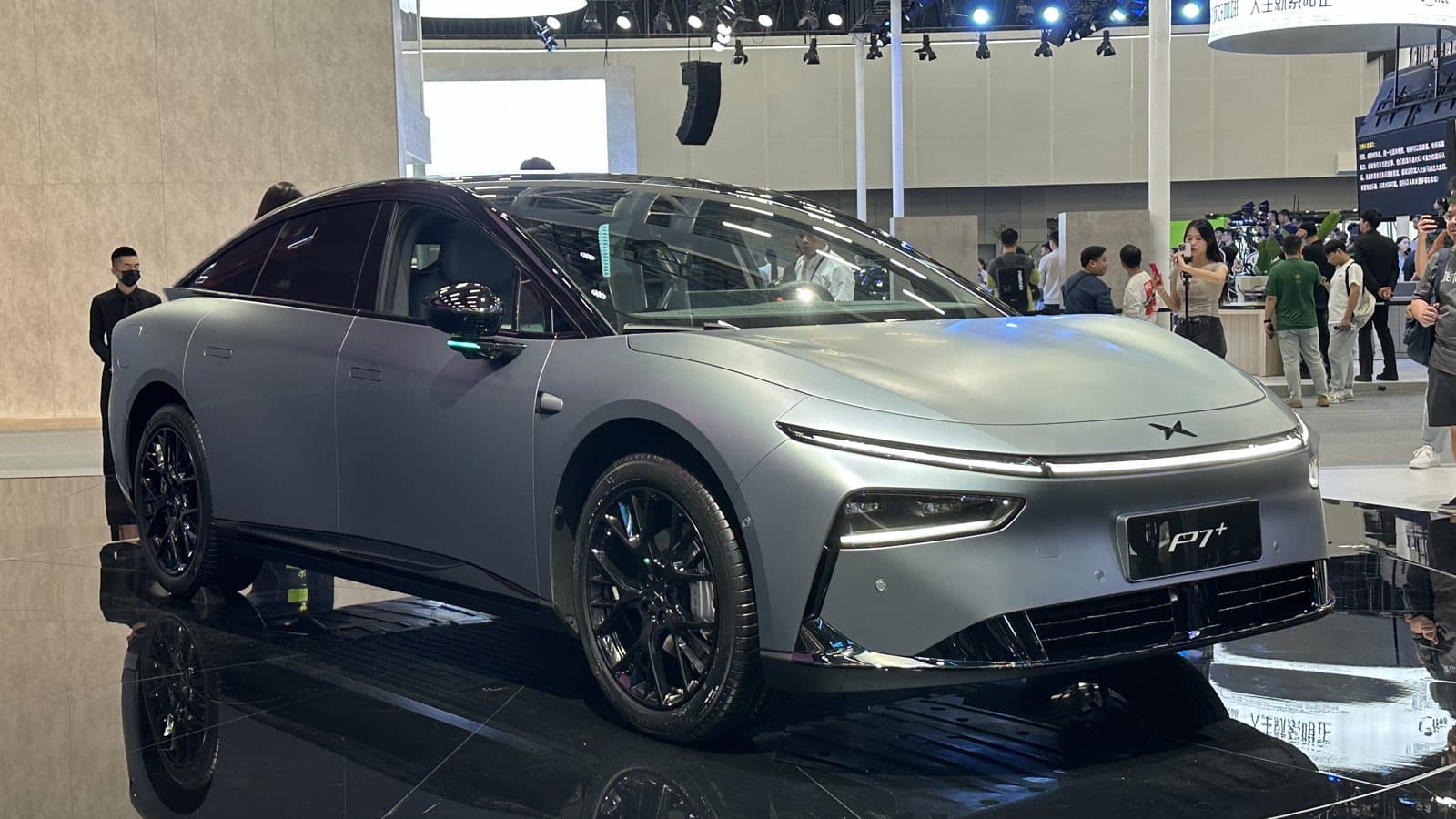
The global automotive industry is undergoing a dual revolution: electrification and autonomous artificial intelligence. While western manufacturers often treat cutting-edge 800V electrical systems and end-to-end vision neural networks as expensive luxury options, Chinese EV pioneer XPeng has democratized both in the all-new XPeng P7+ (P7 Plus).
Positioned as the world's first 'AI-defined vehicle', the P7+ fastback sedan delivers 5-meter executive dimensions, 800-volt ultra-fast charging, and intelligent navigation assistance at a starting price equivalent to just $29,000 to $35,000.
XPeng P7+ AI Smart Electric Liftback Sedan📷 Picture courtesy of XPeng Motors Global
The technological cornerstone of the P7+ is XPeng's SEPA 2.0 architecture, featuring a full-domain 800V high-voltage Silicon Carbide (SiC) powertrain. The efficiency numbers achieved during our instrumented mixed-cycle test are genuinely astonishing:
Energy Consumption: An ultra-low 11.6 kWh per 100 kilometers in urban testing
CLTC Range: Up to 725 km (approx. 530 km real-world WLTP) from a modest 76.3 kWh battery
5C Ultra-Fast Charging: 10% to 80% state of charge in just 12 minutes (adding 300 km in under 10 minutes at compatible high-output DC chargers)
Single Motor RWD Output: 313 HP (230 kW) and 450 Nm of torque
0–100 km/h (0–62 mph): 5.9 seconds
“"By focusing relentlessly on motor winding efficiency, drag reduction, and lightweight silicon-carbide inverters, the P7+ extracts greater real-world range from a 76 kWh pack than many rival EVs get from 100 kWh batteries."”
Previously, XPeng was known as a pioneer of dual-LiDAR sensor suites. With the P7+, however, the company has transitioned to the AI Hawkeye Visual Solution—a pure-vision end-to-end neural network architecture:
Dual Turing AI Chips: High-density neural processing units processing visual sensor feeds with millisecond inference speeds.
LOFIC Optical Sensors: High-performance camera lenses maintaining clarity under extreme low-light, direct headlight glare, and tunnel exits.
End-to-End Large Models: Neural network software directly mapping pixel inputs to steering, acceleration, and braking commands without rule-based code handoffs.
Navigating through dense urban roundabouts and highway interchanges, the system changes lanes with human-like confidence, nudging past double-parked vehicles and identifying pedestrian intentions smoothly.
The XPeng P7+ proves that the electric vehicle cost-performance equation has permanently shifted. Delivering flagship 800V fast-charging, sophisticated vision AI autonomy, and immense interior luxury for the price of a standard combustion family hatchback, the P7+ is a formidable warning shot across the global automotive market.