Gordon Murray T.50 First Drive: The 12,100 RPM V12 Analogue Miracle
M
Marcus Vance
· 11 min read read
0 min left
When Professor Gordon Murray penned the McLaren F1 in the early 1990s, he created what many consider the greatest driver's car in automotive history. For three decades, Murray watched the supercar sector grow heavier, larger, and increasingly detached from the driver through layers of computerized assistance and forced induction.
His answer is the Gordon Murray Automotive T.50. It does not boast four-digit horsepower figures or all-wheel-drive launch control. Instead, Murray pursued an obsessive, fanatical crusade against weight, paired with the most extraordinary naturally aspirated internal combustion engine ever installed in a road car.
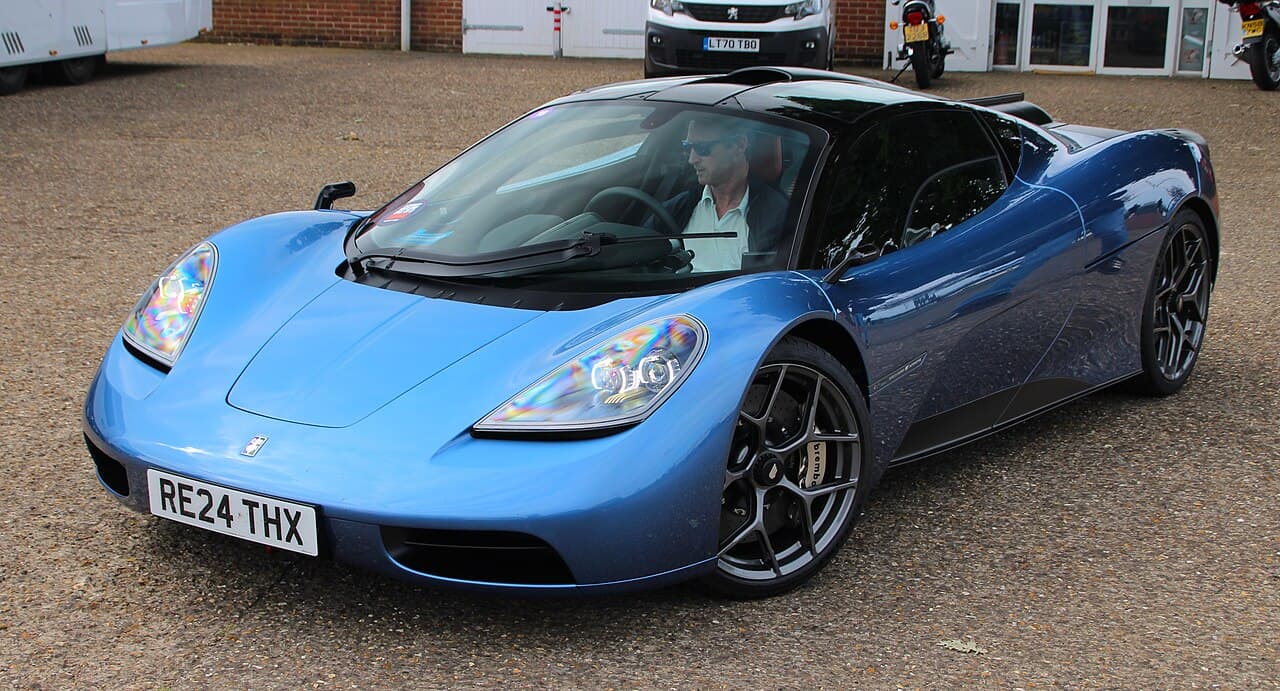
Gordon Murray T.50 Central Seating Position and Carbon Monocoque📷 Picture courtesy of Gordon Murray Automotive
The Cosworth GMA V12: 12,100 RPM of Acoustic Wonder#
Behind the driver's head sits a bespoke 3.9-liter naturally aspirated 65° V12, conceived by Murray and engineered from scratch by Cosworth. Weighing a mere 178 kilograms, it is the lightest road-going V12 engine in existence.
Displacement: 3,994 cc naturally aspirated 65° V12
Maximum Rev Limit: 12,100 RPM (fastest-revving road car engine on Earth)
Engine Response Rate: 28,400 revs per second (reaches 12,100 rpm from idle in 0.3 seconds)
Power Output: 663 PS (654 hp / 488 kW) @ 11,500 rpm (700 PS with V-Max ram-air roof scoop)
Peak Torque: 467 Nm (344 lb-ft) @ 9,000 rpm (with 71% available from just 2,500 rpm)
Transmission: Xtrac 6-speed manual with exposed titanium linkages
Vehicle Dry Weight: 986 kg (2,174 lbs)—lighter than an ND Mazda MX-5 Miata!
“"Pulling past 10,000 rpm in third gear feels less like operating machinery and more like conducting a mechanical symphony that resonates in your marrow."”
Blipping the throttle in neutral is an astonishing sensation. There is virtually no flywheel inertia. The tachometer needle does not climb—it simply teleports to 8,000 rpm and drops back down before your foot has fully lifted off the pedal.
The Central Driving Position: Unobstructed Vision#
Stepping into the T.50 through dihedral doors requires sliding across one of the passenger side pods into the centered driver's bucket. Once nestled in the middle of the carbon-fiber monocoque, the sensation of symmetry and visibility is absolute.
Looking forward, there are no A-pillar blind spots. The road unwinds ahead like an IMAX film. The controls are pure aerospace-grade tactile art: rotary dials machined from solid billet aluminum, analog switches, and an exposed titanium H-pattern gate for the bespoke six-speed manual gearbox.
There is no power steering assist above parking speeds. The unassisted rack provides a level of road-surface communication that modern electric power steering racks have completely erased. Every ripple of tarmac, every grain of bitumen, and every milligram of lateral load transfer registers directly through your palms.
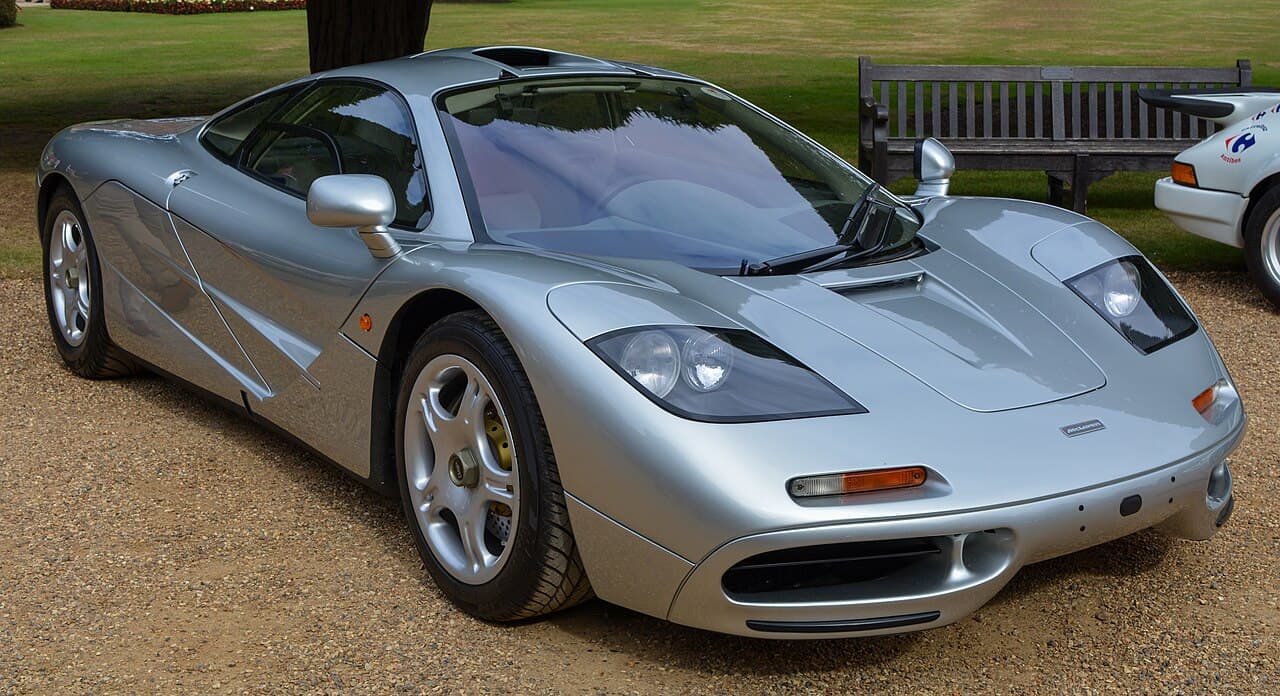
McLaren F1 XP5 Ancestral Benchmark📷 Picture courtesy of McLaren Heritage
At the rear of the T.50 sits its most visually audacious feature: a 400mm 48-volt ground-effect fan. Derived from Murray's infamous Brabham BT46B 'Fan Car' that won the 1978 Swedish Grand Prix before being banned, the system manipulates underbody airflow with revolutionary efficiency:
High-Downforce Mode: The fan spins at maximum velocity, rapidly extracting turbulent boundary layer air from the rear diffuser, boosting overall downforce by 50%.
Streamline Mode: Reduces aerodynamic drag by 12.5% by pulling air through upper body ducts to simulate an extended 'virtual longtail' aerodynamic wake.
Braking Mode: Deploys under heavy braking, generating an additional 100% downforce to shorten stopping distances by nearly 10 meters from 240 km/h.
V-Max Mode: Pairs Streamline aerodynamics with 48V motor boost, providing up to 700 horsepower for straight-line velocity runs.
Because the fan generates massive vertical downforce through boundary layer suction, the T.50 does not need monstrous fixed wings or massive front splitters. Its exterior styling remains remarkably pure, elegant, and timeless.
Priced at £2.8 million before taxes with all 100 customer cars sold instantly, the Gordon Murray Automotive T.50 is not a vehicle for spec-sheet bench racers. It is the definitive analog masterpiece of our time. It proves that lightness, acoustic brilliance, and mechanical purity will always triumph over computer-assisted horsepower.