Next-Gen Tesla Roadster: Inside the Sub-1-Second Cold-Gas Thruster Hypercar
J
James Mercer
· 8 min read read
0 min left
When Elon Musk first unveiled the second-generation Tesla Roadster prototype, the promised numbers sounded like sheer automotive hyperbole: 0-60 mph in 1.9 seconds, a top speed eclipsing 250 mph (402 km/h), a quarter-mile run in 8.8 seconds, and 620 miles (1,000 km) of highway range from a 200 kWh battery pack.
Now, with the production model nearing validation and public road trials, Tesla's collaboration with aerospace sister company SpaceX has pushed the engineering brief into uncharted territory: an optional cold-gas thruster package utilizing ultra-high pressure air canisters seamlessly embedded behind the rear license plate holder and rocker panels.
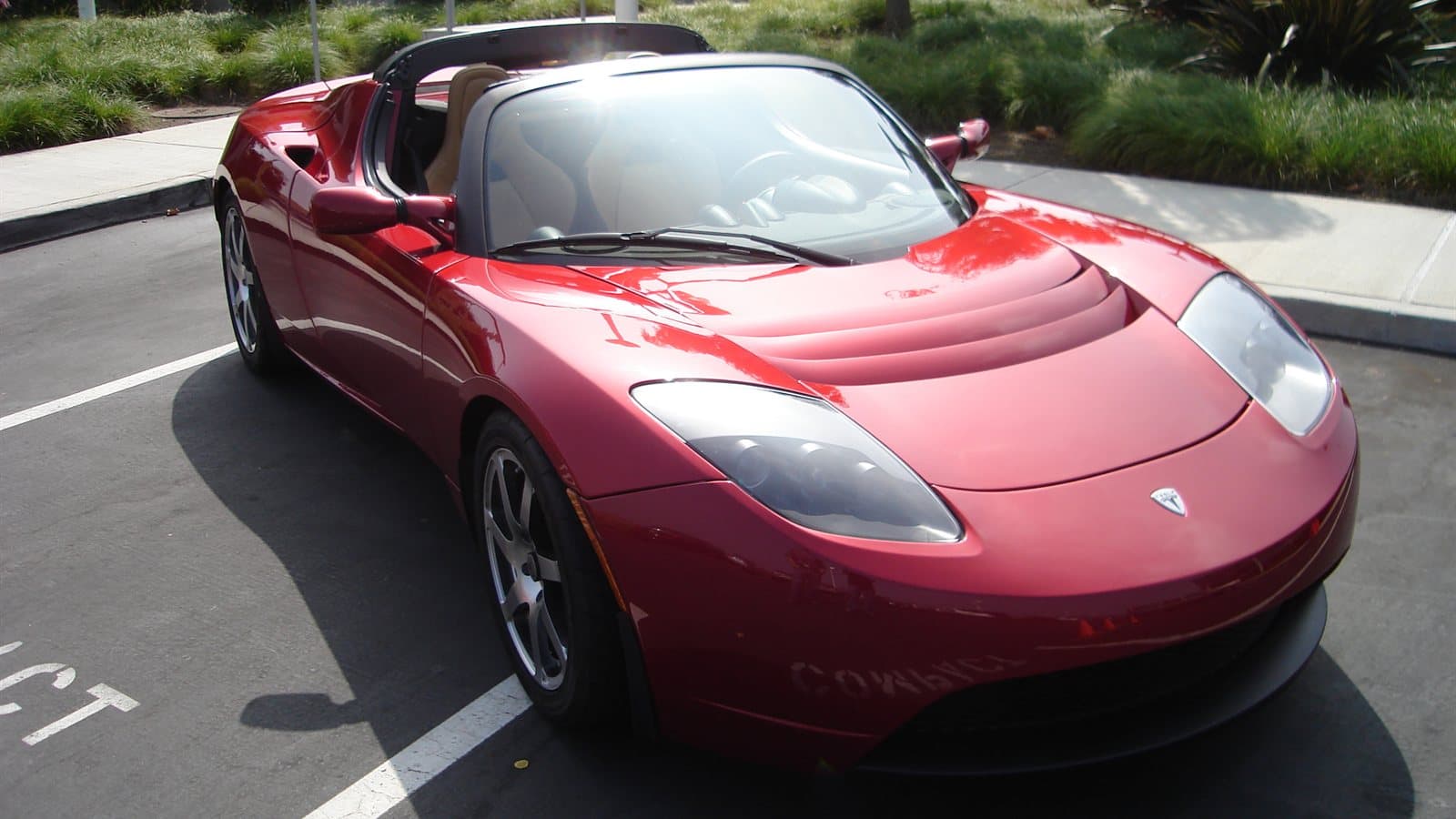
Next-Gen Tesla Roadster Red Prototype Aero Silhouette📷 Picture courtesy of Tesla, Inc.
Unlike traditional internal combustion or electric launches that rely strictly on tire friction (where mechanical grip is limited by the coefficient of friction between rubber compound and tarmac), the Roadster's SpaceX Package utilizes composite overwrapped pressure vessels (COPV) operating at 10,000 psi. These thrusters emit violent pulses of compressed gas to achieve three distinct dynamic feats:
Reaction Propulsion: Thrust vectoring directly assists longitudinal acceleration, targeting 0-60 mph in under 1.0 second.
Downforce On Demand: Downward-firing thruster nozzles create instantaneous vertical load on corner entry, simulating thousands of pounds of aerodynamic downforce without aerodynamic drag.
Braking Deceleration: Forward-firing pulses dramatically shorten stopping distances during emergency or track threshold braking.
“"The limiting factor in automotive launches has always been the tire friction circle. When you introduce external reaction thrust, you decouple acceleration from tarmac adhesion."”
Even without the thruster system, the base tri-motor powertrain—combining one motor on the front axle and two independently controlled motors on the rear axle—pumps out over 1,450 horsepower and an estimated 10,000 Nm of wheel torque.
200 kWh Structural Battery Pack & 1,000 KM Touring Range#
While hypercars like the Rimac Nevera and Lotus Evija sacrifice range to curb weight, Tesla has packed an enormous 200 kWh battery module into the floorpan. Leveraging 4680 tabless structural cell architecture, the pack acts as the primary shear web for the monocoque chassis:
Total Energy Capacity: 200.0 kWh nominal
EPA Estimated Range: 620 miles (1,000 km)
DC Fast Charging: Up to 350 kW on V4 Superchargers (adds 250 km in 10 minutes)
Curb Weight: 1,880 kg (engineered via carbon-fiber exterior shell and aluminum unibody)
Chassis Layout: 2+2 grand tourer with lightweight removable tinted glass targa roof
The Next-Gen Tesla Roadster represents more than an electric sports car—it is an audacious engineering experiment aimed at permanently dethroning combustion hypercars. If Tesla meets its sub-second acceleration target, the automotive landscape will be fundamentally divided into before and after the Roadster.