Active Aerodynamics & Digital Twins: How Virtual Wind Tunnels Are Reshaping Supercars
R
Ryo Tanaka
· 7 min read read
0 min left
For over a century, automotive aerodynamics evolved through trial and error inside physical wind tunnels. Clay models fitted with smoke wands, wool tufts, and pitot tubes provided engineers with empirical clues about boundary layer separation and vortex creation.
Today, that physical workflow has been superseded by high-performance supercomputing clusters, artificial intelligence, and digital twins. Supercars like the Koenigsegg Jesko Attack, Ferrari SF90 XX, and Pagani Utopia are sculpted in virtual airflow simulators capable of modeling billions of turbulent air particles in real time.
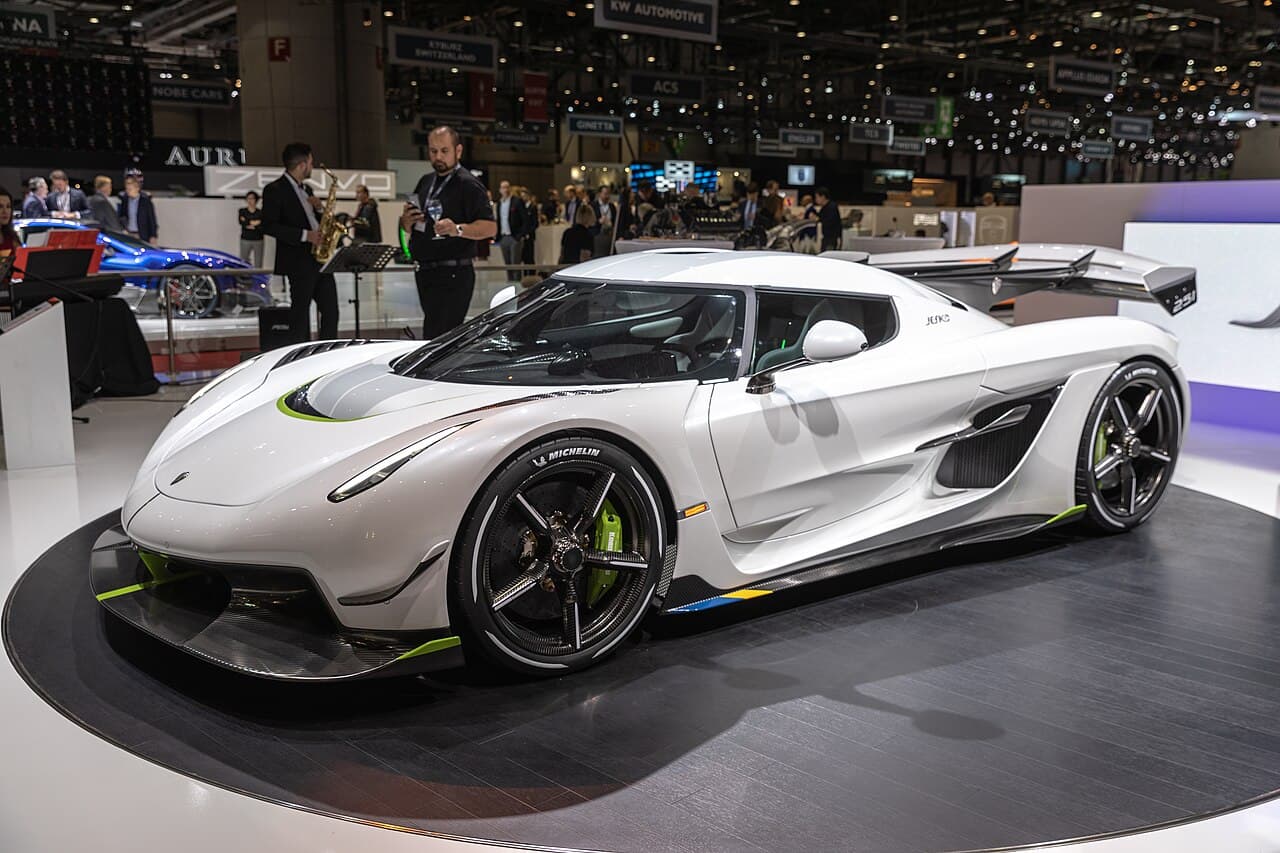
Koenigsegg Jesko Attack Active Top-Mounted Rear Wing📷 Picture courtesy of Koenigsegg Official
The Computational Revolution: Lattice Boltzmann Digital Twins#
Modern aerodynamicists no longer rely solely on traditional Reynolds-Averaged Navier-Stokes (RANS) equations. Instead, cutting-edge engineering departments deploy Lattice Boltzmann Method (LBM) algorithms running on massive GPU clusters:
Compute Scale: Simulations running across 30,000+ GPU cores processing transient airflow models with over 4 billion fluid cells.
Dynamic Mesh Modeling: Simulating vehicle ride-height fluctuations, suspension heave, roll angles, and wheel rotation at 350 km/h with sub-millimeter precision.
Aero-Acoustic Simulation: Predicting cabin wind noise and mirror turbulence digitally before building a single prototype tooling die.
Development Cycle Reduction: Compressing aerodynamic design cycles from 18 months of wind-tunnel visits down to six weeks of continuous virtual CFD optimization.
“"A modern hypercar is no longer a static shape cutting through the atmosphere; it is an active pneumatic organism continuously shaping airflow to its will."”
Active Aerodynamics: Morphing Wings and Ground-Effect Venturis#
The insights gained from digital wind tunnels have sparked a renaissance in active, morphological aerodynamics. Rather than sticking a single massive wing onto the decklid, today's hypercars operate as dynamic aerodynamic organisms:
Active Top-Mounted Swan-Neck Wings: Top-mounted inverted wing stanchions—as seen on the Koenigsegg Jesko Attack—preserve smooth airflow across the wing's low-pressure underside, increasing downforce efficiency by 30% over bottom-mounted pylons.
Underbody Active Diffusers: Electro-hydraulic actuators open and close venturi channels beneath the floor, manipulating ground-effect downforce without adding aerodynamic drag.
Airbrake Deployment in Milliseconds: High-torque brushless servo motors can rotate rear wing elements from low-drag flat positions into full 80-degree vertical airbrakes in under 150 milliseconds.
Downforce Thresholds: Modern hypercars routinely generate over 1,000 kg of vertical downforce at 250 km/h, exceeding the vehicle's own curb weight at theoretical top speeds.
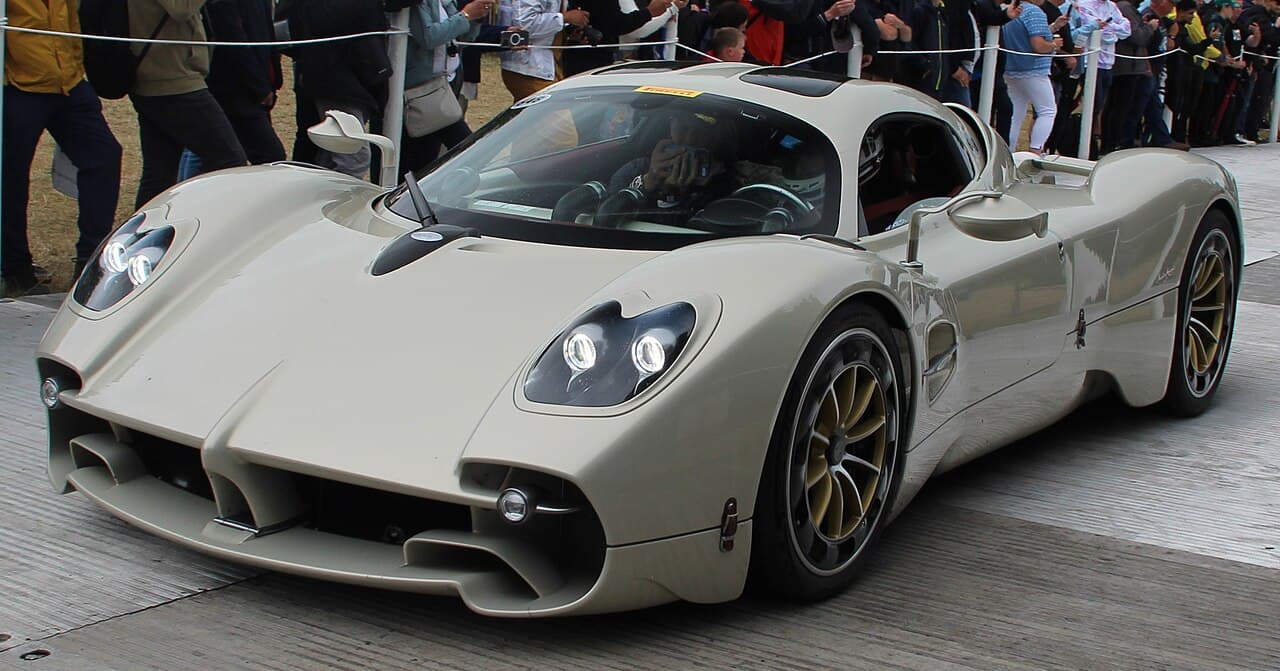
Pagani Utopia Sculpted Mechanical Aerodynamics📷 Picture courtesy of Pagani Automobili
Real-Time Neural Networks and Adaptive Chassis Integration#
The ultimate frontier of aerodynamic engineering is closing the loop between simulation and real-time vehicle dynamics. Today's central vehicle supercomputers take sensor inputs from ride-height lasers, steering angle sensors, yaw rate gyroscopes, and forward-facing radar to predict airflow behavior before the chassis physically enters the turn.
As the car brakes hard into a corner, the front active flaps close to prevent nose dive, while the rear wing adjusts angle-of-attack to keep the rear axle planted. When straight-line speed is required, the digital controller automatically triggers DRS mode, dropping drag by up to 45% for effortless top-speed acceleration.
The fusion of virtual supercomputing and real-time mechatronic execution has permanently transformed hypercar design: airflow is no longer an adversary to overcome, but an invisible partner harnessed to redefine the boundaries of physics.